Source Sea Fishing Line for River, Stream, and Outdoor Gear
Explore 30 verified listings for sea fishing line suitable for river, stream, and outdoor gear applications. Buyers can compare specifications including material, strand count, and length from manufacturers in China with customizable options.
Key considerations
Products List


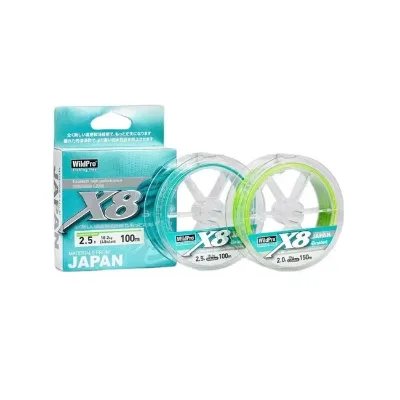


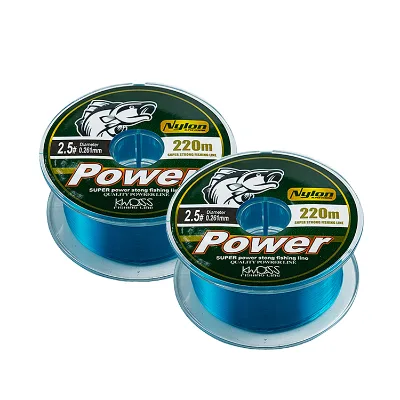
Comprehensive Sourcing Guide
Strategic Sourcing Guide for Sea Fishing Line Procurement
Understanding Technical Specifications and Material Composition
When sourcing sea fishing lines, buyers must first distinguish between the various material compositions and structural designs that define product performance. The market offers distinct variations based on the polymer used and the braiding configuration. A primary observation in the current supply landscape is the prevalence of Nylon and Polyethylene (PE) as core materials. Nylon-based lines are often associated with specific certifications such as CE and ISO9001, indicating a baseline for quality management systems in the manufacturing process. Conversely, PE-based lines, particularly those described as "Braided Wire" or "8 Strands," offer different tensile characteristics suitable for high-stress marine environments.
The structural integrity of the line is frequently defined by the number of strands. Available configurations observed in the market include 4-strand, 6-strand, 8-strand, and 9-strand options. These variations directly influence the line's flexibility, abrasion resistance, and breaking strength. For instance, a "4 Strands" model may differ significantly in handling from a "9 Strands" variant. Buyers should verify the specific strand count against their intended load requirements. Furthermore, the physical form of the line is categorized by its buoyancy and shape. Options range from "Floating Line" to "Level" shapes, with specific applications for "River" or "Sea" locations. The color spectrum also varies, with "Transparent" and "Grey" being common observations, which can affect visibility in different water conditions.
Compliance, Certification, and Standard Verification
Navigating the regulatory landscape is critical for B2B procurement, especially when dealing with international trade. The origin of these products is predominantly China, with specific manufacturing hubs noted in regions like Shandong. When evaluating suppliers, buyers should prioritize those who can demonstrate adherence to recognized standards. The supply data indicates that certain products carry CE and ISO9001 certifications, which serve as indicators of compliance with European safety standards and international quality management protocols. However, these certifications should not be assumed for every SKU; they must be verified on a per-product basis.
In addition to general certifications, specific product standards are often referenced in the supply chain. These include length specifications such as 50m, 100m, and 100m, as well as weight standards like 1/4 lb. The presence of SGS standards in the product data suggests that third-party testing may be available for certain batches. Buyers must explicitly request proof of these standards rather than relying on general marketing claims. It is also essential to understand that "Standard" in this context can refer to packaging configurations, such as "6 pieces a box" or "Box in Carton," as well as physical product specifications. Ensuring that the supplier's documentation aligns with the specific standard required for the target market is a non-negotiable step in the compliance check.
Cost Drivers and Pricing Dynamics
The pricing structure for sea fishing lines is influenced by a complex interplay of material costs, manufacturing complexity, and order volume. The observed price range in the market spans from $0.02 to $22.00 USD. This wide variance suggests that the cost is heavily dependent on the specific product model, material grade, and packaging requirements. For example, a basic Nylon line with a standard length may fall at the lower end of the spectrum, while a specialized Braided Wire line with high strand counts and custom branding could command a premium price.
Order Volume is a significant driver of unit cost. The Minimum Order Quantity (MOQ) observed ranges from 1 piece to 30,000 pieces. Suppliers often offer tiered pricing structures where the unit cost decreases as the order volume increases. Buyers should be aware that an MOQ of 10 pieces might be available for sample orders, but bulk procurement typically requires adherence to higher thresholds. Additionally, customization services, such as OEM branding and custom packaging, introduce variable costs. While "Can Be Customised" is listed as an attribute, the financial impact of these services must be negotiated individually. The "Negotiable" nature of packaging and the "as Picture" packing options further indicate that logistics and packaging costs are flexible and should be factored into the total landed cost calculation.
Typical Applications and Usage Scenarios
The versatility of sea fishing lines is evident in their diverse application profiles. The primary usage categories identified include Agriculture and Outdoor Gear, though the specific context of "Sea" and "River" locations points to a strong focus on marine and freshwater fishing. The product attributes distinguish between lines intended for "Main Line" usage and those designed for specific "Fish Part" applications, such as the "Fishing Line" itself. The buoyancy characteristics are crucial for application matching; "Floating Line" variants are ideal for surface fishing techniques, while "Level" lines may be preferred for deeper water operations.
The environmental context also dictates the choice of line. Products are explicitly categorized for use in "River," "Stream," and "Sea" environments. A line optimized for a "River" setting, potentially with specific length requirements like "Line No.: 1" or "Line No.: 2," may not perform optimally in the high-salinity, high-current conditions of the "Sea." Buyers must align the product's location specification with their intended use case. Furthermore, the strength ratings, which range from 8lb-100lb and 10lb-100lb, provide a quantitative measure for selecting the right line for specific fish species. Understanding these application nuances ensures that the procurement strategy matches the operational demands of the end-user.
Supplier Evaluation and Capability Assessment
Evaluating potential suppliers requires a rigorous assessment of their production capabilities and service flexibility. The supply data highlights several key attributes that serve as indicators of supplier maturity. "Customization" is listed as an available attribute, and "OEM" (Original Equipment Manufacturer) services are explicitly "Accept"ed. This suggests that many suppliers are capable of producing branded goods according to buyer specifications. Additionally, the availability of samples ("Avaliable") is a critical factor for quality verification before committing to large orders.
Lead time is another vital metric for supply chain planning. The observed delivery time is listed as 7 days, which indicates a relatively fast turnaround for standard orders. However, buyers should verify if this lead time applies to customized orders or if it is subject to change based on production capacity. The origin location, specifically "China Shanodng," provides geographical context but does not guarantee quality on its own. Buyers should assess the supplier's ability to handle "Negotiable" packaging requirements and their flexibility in meeting specific "Line No." or "Length(m)" specifications. The presence of various product models, such as "FL-1," "FL-2," "FL-3," and "MINGGUAN," indicates a diverse product portfolio, but buyers must ensure the supplier can consistently deliver the specific model required for their needs.
Quality Control and Long-Term Procurement Strategy
Establishing a robust quality control framework is essential for maintaining product integrity over time. Given the wide range of materials and strand counts, buyers should implement a sampling protocol that tests for tensile strength, abrasion resistance, and colorfastness. The observed strength ranges (8lb-100lb) provide a baseline for testing, but actual performance may vary based on the specific manufacturing batch. Buyers should request test reports or certification documents that validate these strength claims, particularly for high-strength applications.
Long-term procurement considerations involve building a sustainable relationship with suppliers who can scale with demand. The ability to handle MOQs up to 30,000 pieces suggests that suppliers have the capacity for large-scale production. However, consistency in quality across different batches is paramount. Buyers should consider the "Brand: Can Be Customised" attribute as an opportunity to build a unique market identity, but this requires clear communication of quality standards. Additionally, the "Package" and "prod_packing" attributes (e.g., "Carton," "Box in Carton") must be standardized to ensure safe transport and storage. By focusing on these operational details, buyers can mitigate risks associated with supply chain disruptions and ensure a steady flow of high-quality sea fishing lines.
Comparative Analysis of Product Models
To facilitate informed decision-making, it is helpful to compare the key attributes of different product models available in the market. The following table summarizes the observed specifications for various models, highlighting differences in material, strand count, and intended location.
| Product Model | Material | Strands | Typical Location | Strength Range | Packaging |
|---|---|---|---|---|---|
| FL-1 | Nylon | N/A | River | N/A | Carton |
| FL-2 | Nylon | N/A | River | N/A | Carton |
| FL-3 | Nylon | N/A | River | N/A | Carton |
| PE 4X | PE | 4 | Sea | 8lb-100lb | Box in Carton |
| PE 8X | PE | 8 | Sea | 10lb-100lb | Box in Carton |
| Spotted Fishing Line | Braided Wire | 6 | Sea | N/A | Box in Carton |
| MINGGUAN | Nylon | N/A | Sea | N/A | Carton |
| 4 Strands | Braided Wire | 4 | Sea | N/A | 6 pieces a box |
| 6 Strands | Braided Wire | 6 | Sea | N/A | 6 pieces a box |
| 9 Strands | Braided Wire | 9 | Sea | N/A | 6 pieces a box |
Note: Data reflects observed attributes from the supply context. Specific strength ranges and strand counts are subject to verification per product batch.
This comparison underscores the importance of matching the specific product model to the intended application. For instance, the PE 8X model, with its 8-strand construction and higher strength range, is likely better suited for heavy-duty sea fishing compared to the standard Nylon models. By systematically evaluating these attributes, buyers can optimize their procurement strategy to meet both performance requirements and budget constraints.
FAQs
What certifications do sea fishing lines typically have?
Many sea fishing lines carry CE and ISO9001 certifications, indicating compliance with European safety and quality management standards. These certifications are observed on Nylon-based products but must be verified per specific product batch rather than assumed for all models.
Which materials are used for sea fishing lines?
The primary materials observed are Nylon and Polyethylene (PE), with some options described as Braided Wire. Nylon lines often feature specific certifications, while PE lines, such as 8-strand variants, offer distinct tensile characteristics suitable for high-stress marine environments.
Can I customize the brand on sea fishing lines?
Yes, customization is available, and OEM services are accepted by many suppliers. Buyers can request custom branding and packaging, though the specific costs and lead times for these services must be negotiated individually with the manufacturer.
How many strands are available for sea fishing lines?
Available configurations include 4-strand, 6-strand, 8-strand, and 9-strand options. The strand count directly influences flexibility and breaking strength, with specific models like PE 4X and PE 8X offering different performance profiles for various fishing conditions.
What is the lead time for sea fishing line orders?
The observed delivery time for standard orders is typically 7 days. This lead time may vary depending on order volume, customization requirements, and specific production capacity, so buyers should verify timelines for customized or large-scale requests.
Where are sea fishing lines manufactured?
The products originate primarily from China, with specific manufacturing hubs noted in regions like Shandong. Buyers should verify the exact origin location for each supplier to ensure alignment with their logistics and compliance requirements.
What is the minimum order quantity for sea fishing lines?
The minimum order quantity ranges from 1 piece to 30,000 pieces depending on the supplier and product model. Some items may have an MOQ of 10 pieces for samples, while bulk procurement typically requires adherence to higher thresholds.